
info@aquatechgurus.com Serving PA, NJ, DE & West Palm Beach, FL Phones answered 24/7
Home / Contaminants / Hardness Minerals

Hard Water: Calcium, Magnesium & Scale Buildup

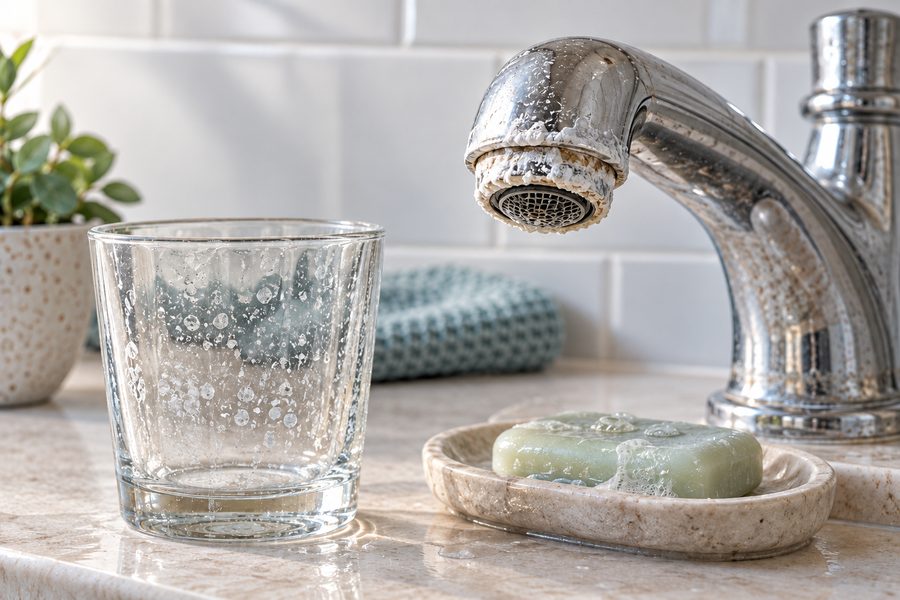
White, chalky buildup on faucets, spotty glassware straight out of the dishwasher, and soap that won't lather are the telltale signs of hard water — dissolved calcium and magnesium minerals that are extremely common throughout our area's water supply, whether it comes from a well or the municipal system.

What It Is

What Hard Water Actually Means

Water hardness is measured by the combined concentration of dissolved calcium and magnesium, typically in grains per gallon (gpg) or milligrams per liter. Water is generally considered soft below about 1 gpg, moderately hard from 1–3.5 gpg, hard from 3.5–7 gpg, and very hard above 7 gpg. These minerals aren't a health concern to drink — the EPA doesn't regulate hardness at all — but they bind with soap, coat every surface the water touches, and leave mineral deposits (limescale) inside pipes and appliances that build up over years.

Hard water mineral scale buildup on a faucet
Watch For This

Signs to Look For

  • White, chalky scale buildup around faucets and showerheads
  • Spotty glassware and dishes even straight out of the dishwasher
  • Soap or shampoo that won't lather well, and skin or hair that feels dry afterward
  • Dingy, stiff-feeling laundry even with plenty of detergent
  • Reduced water heater efficiency or a shortened appliance lifespan
How We Fix It

Chlor-A-Soft® Water Softener

Chlor-A-Soft® Water Softener

Canada's top-selling combination softener removes hardness minerals through ion exchange, backed by a 20-year unlimited warranty — and can be combined with chemical filtration in one system for homes on municipal or well water.

Learn More

Curious What's In Your Water?

We'll test it for free and show you exactly what a system would remove.

Request a Free Water Test
FAQ

Hardness Minerals: Common Questions

Yes. Calcium and magnesium aren't a health concern at typical household levels — the EPA doesn't regulate water hardness at all. Hardness is a quality-of-life and appliance-longevity issue, not a safety one.

A filter removes contaminants like chlorine, sediment or bacteria. A softener specifically removes hardness minerals through ion exchange — they solve different problems and are often paired together.

A water test will give you an exact hardness reading in grains per gallon, which also tells us the right softener size and salt settings for your specific home.

Call Now — (267) 225-8282