
Carbon + Resin System
Strips chlorine, chloramine and taste/odor compounds right where water enters your home.
Learn More
Your city water is tested and treated before it ever reaches your tap — but treatment adds its own chemicals, and quality can still change on the trip through aging pipes. Here's what actually happens between the river and your faucet.
Municipal water almost always starts as surface water — a river or reservoir — rather than groundwater. Philadelphia's three treatment plants draw from the Delaware River (Baxter Plant) and the Schuylkill River (Queen Lane and Belmont plants), and most suburban systems across Bucks, Montgomery, Chester and Delaware counties, South Jersey and New Castle County draw from similar surface or purchased-wholesale sources. Treatment generally follows the same four steps everywhere:
That last step is the one municipal treatment can't control: once water leaves the plant, what it picks up on the way to your faucet depends on the condition of pipes the utility owns and the pipes you own.
Municipal treatment is genuinely effective against pathogens — but it isn't designed to remove everything, and a few of these are actually byproducts of the treatment process itself.
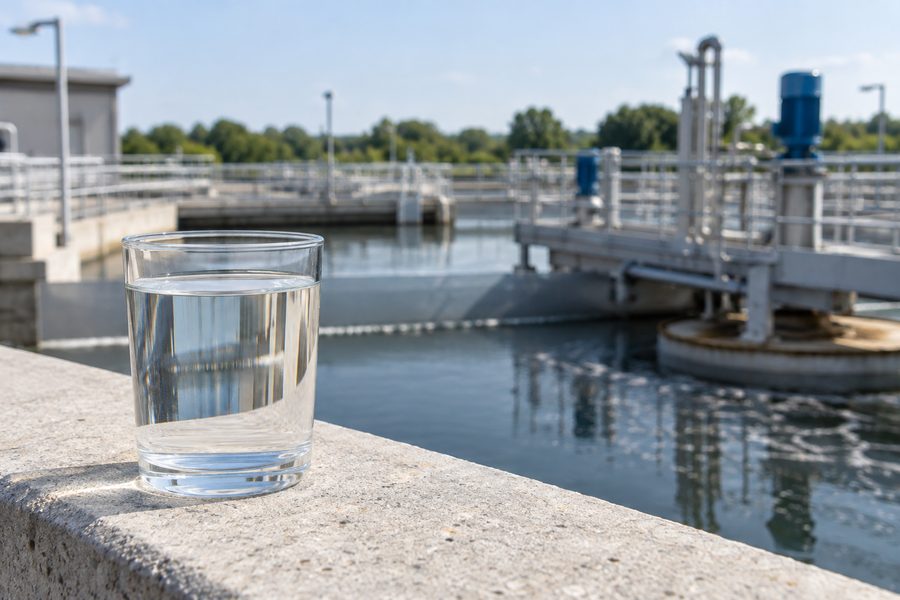
Added intentionally to disinfect — effective, but leaves the taste and odor many people filter out at the tap.
Learn More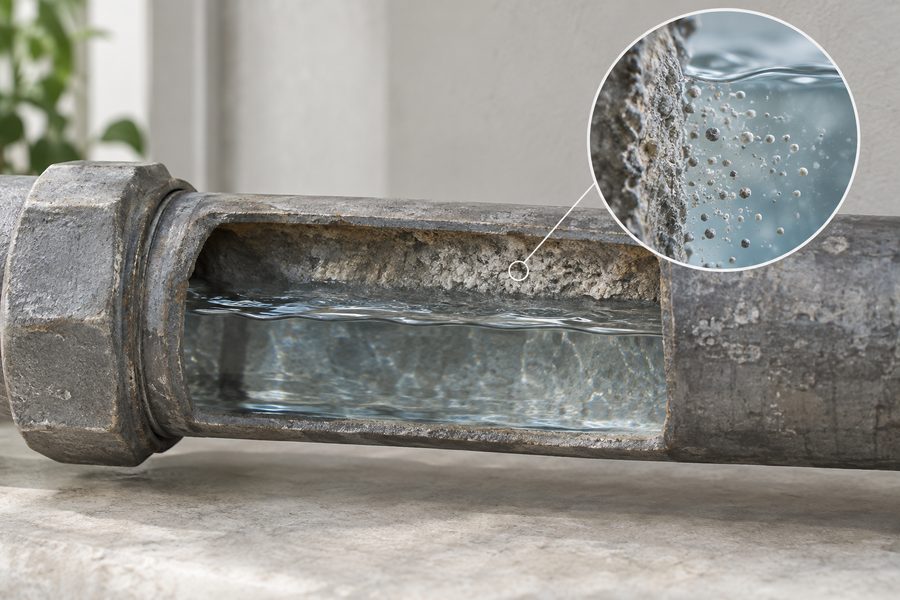
Not in the source water — leaches from lead service lines and older household plumbing, especially pre-1986 homes.
Learn More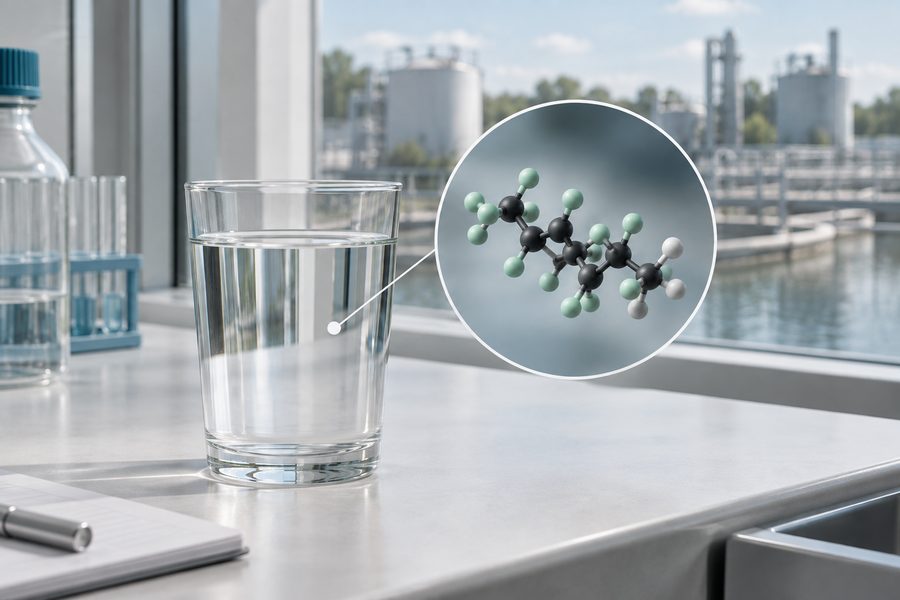
Industrial compounds that standard treatment doesn't fully remove.
Learn More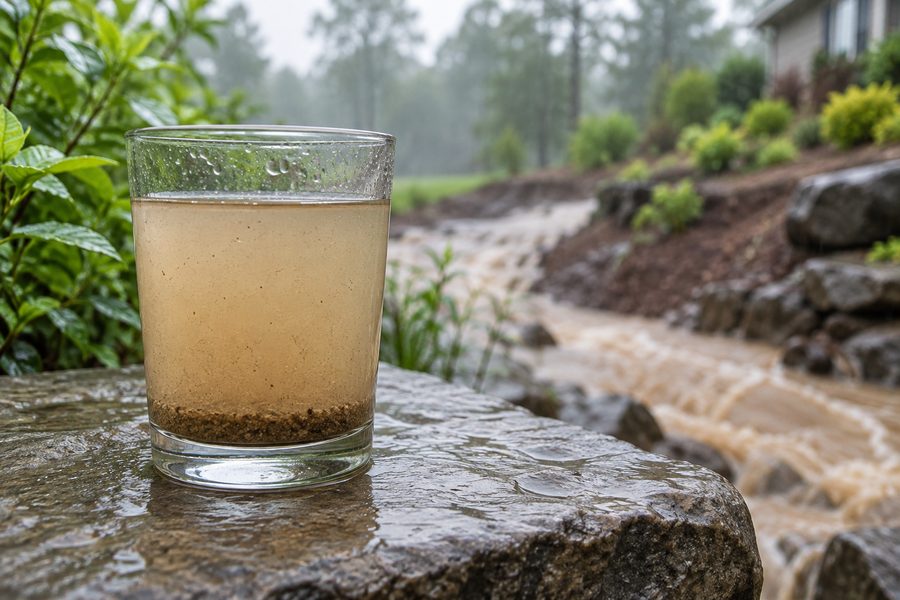
Fine particles that can enter the distribution system after water main work or heavy rain events.
Learn MoreWhen chlorine or chloramine reacts with naturally occurring organic matter in source water — leaves, algae, decaying plant material — it forms a family of compounds called disinfection byproducts (DBPs). The two the EPA regulates most closely are total trihalomethanes (TTHMs) and five haloacetic acids (HAA5), capped under the Stage 2 Disinfectants and Disinfection Byproducts Rule at 80 parts per billion and 60 parts per billion respectively, averaged across a utility's distribution system. Levels tend to run higher in summer, when warmer water and longer pipe residence times give the reaction more time to happen, and research has tied long-term DBP exposure to increased risk of certain cancers and reproductive effects — part of why the EPA regulates them at all despite disinfection itself being essential for safe water.
The tradeoff utilities navigate is real: disinfect too little and pathogens become the risk; disinfect more and DBP formation climbs. It's one more reason surface-water systems (rivers, reservoirs — higher organic content) tend to see more DBP formation than groundwater-fed systems, and one more thing a home carbon filter is well suited to reduce at the tap.
Philadelphia and many of its surrounding suburbs are old cities with old infrastructure — which is exactly where EPA's newest lead rule matters most.
In October 2024, the EPA finalized the Lead and Copper Rule Improvements (LCRI), requiring water systems nationwide to fully replace virtually all lead and "galvanized requiring replacement" service lines under their control within 10 years, with only limited exceptions — and partial replacements are no longer allowed outside emergency repairs or planned infrastructure work. The rule's public education materials must now state plainly that there is no safe level of lead in drinking water, with specific language about risk to pregnant people, infants and young children.
Utilities must also keep a publicly accessible service line inventory (by address, for systems serving more than 50,000 people), notify anyone served by a known or possibly-lead line annually, and provide notice within 24 hours whenever work disturbs a lead or unknown line. If a system exceeds the lead action level three times in five years, it must provide pitcher filters or point-of-use devices certified to reduce lead — plus six months of replacement cartridges — to every affected household, renters included. None of this replaces testing your own water: inventories can mark a line "unknown," and the service line on your side of the meter is your responsibility, not the utility's.
Every community water system is required under the Safe Drinking Water Act to publish an annual Consumer Confidence Report (CCR) — sometimes called a water quality report — detailing what was detected in your specific supply over the past year, including disinfection byproduct averages, lead testing results, and any violations. Philadelphia Water Department and most suburban systems post theirs online; it's worth reading your own utility's report at least once, since the numbers vary meaningfully between treatment plants and distribution zones even within the same city. It's also, by design, a snapshot of the water leaving the plant — not necessarily what's coming out of your own tap after it travels through your home's own pipes.
Strips chlorine, chloramine and taste/odor compounds right where water enters your home.
Learn MoreUp to 99.5% contaminant removal, including lead and PFAS, for pure water at your kitchen tap.
Learn MoreCombines chemical removal with ion-exchange softening in one whole-home system.
Learn MoreOn a private well instead? See our Private Well Water guide. Sources: U.S. EPA (Lead and Copper Rule Improvements, Fact Sheet 816-F-24-011, Oct. 2024; Stage 2 Disinfectants and Disinfection Byproducts Rule), Philadelphia Water Department public water quality data, Safe Drinking Water Act Consumer Confidence Report requirements. Provided for general information — not a substitute for your own water test.
We'll test your water and walk you through exactly what we find — no cost, no obligation.