
Why white scale keeps coming back
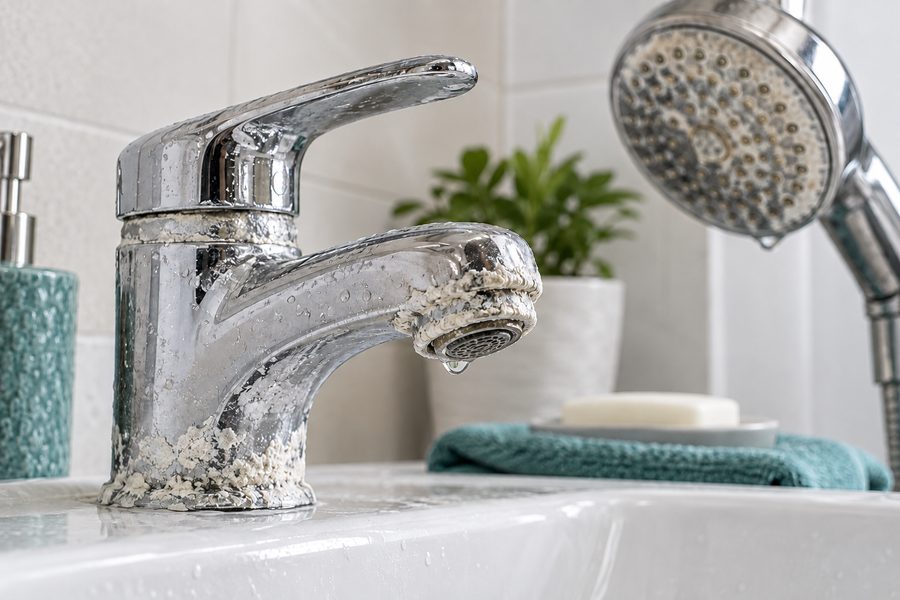
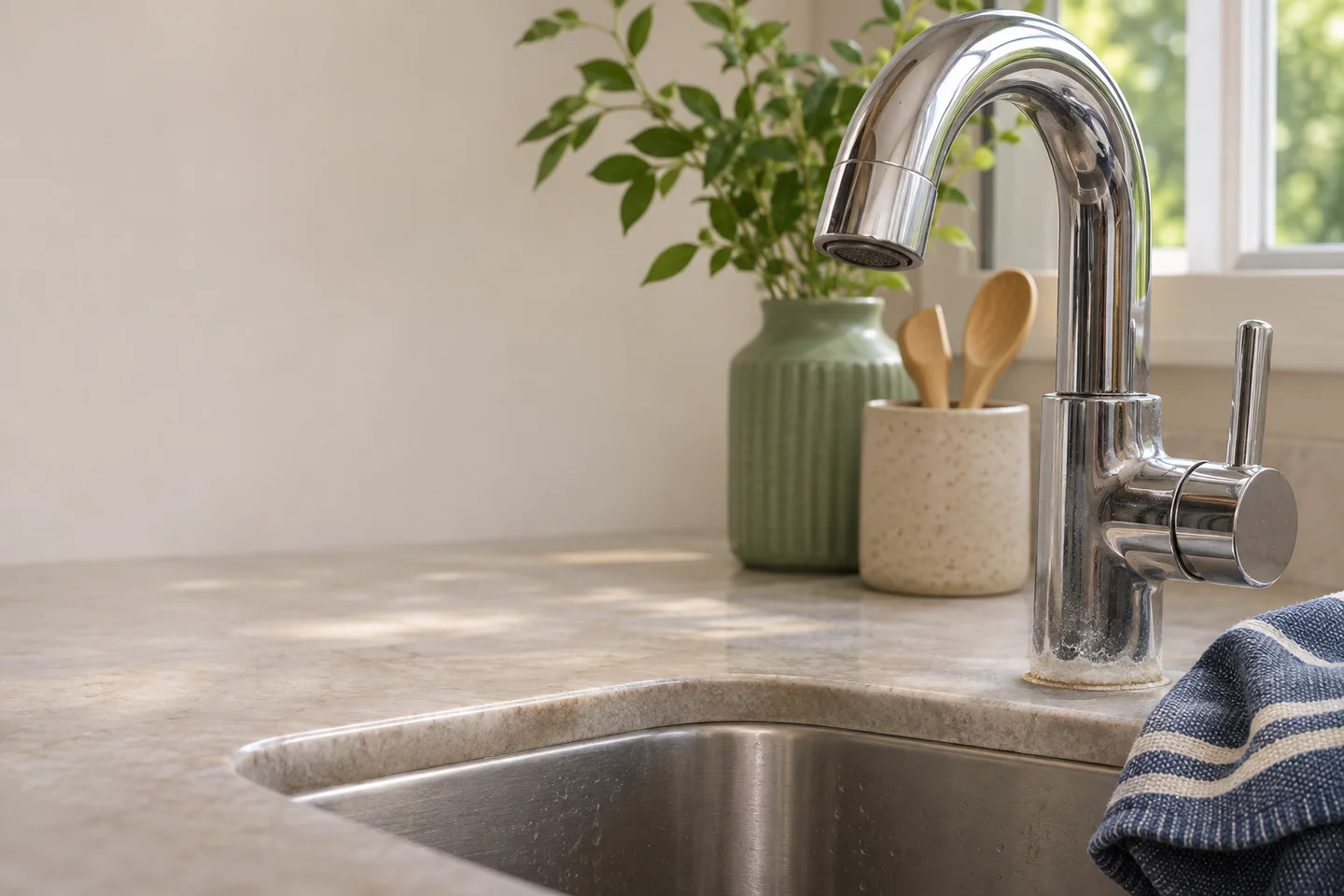
You clean the faucet until it shines. A week later, there is a pale ring around the base and a rough crust along the spout. The same pattern may show up on the shower door, inside the kettle, or around the holes in the showerhead. When it appears in places where water regularly dries, mineral scale is a reasonable possibility. The location and timing of the buildup can tell you more than its color alone.
Minerals and evaporation
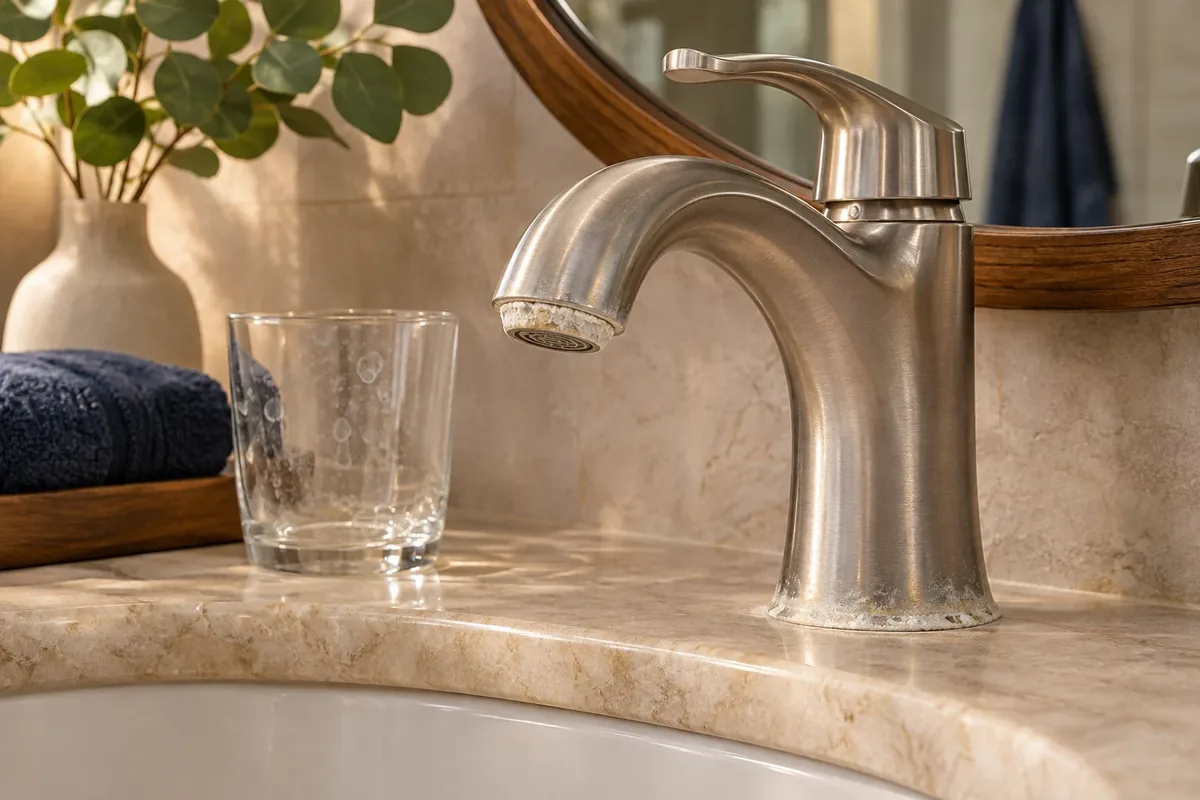
Water hardness measures dissolved minerals, primarily calcium and magnesium. Those minerals can remain on a surface after the water evaporates. Heat can also encourage some deposits to form, which helps explain why a kettle or hot-water fixture may show scale before a cold-water tap does. The minerals can be present even when the water in the glass looks clear.
Start with the pattern around your home
Check the bathroom faucet, the kitchen tap, and a fixture on a different floor. Compare surfaces that get wet every day with surfaces that rarely see standing water. If several fixtures have a similar crust, take photos before cleaning them. If the marks are limited to one fitting, look for a slow drip, a puddle around the base, or overspray from a nearby sink. Fixing a small leak can change where a deposit forms even when the incoming water stays the same.
Notice the surface and texture
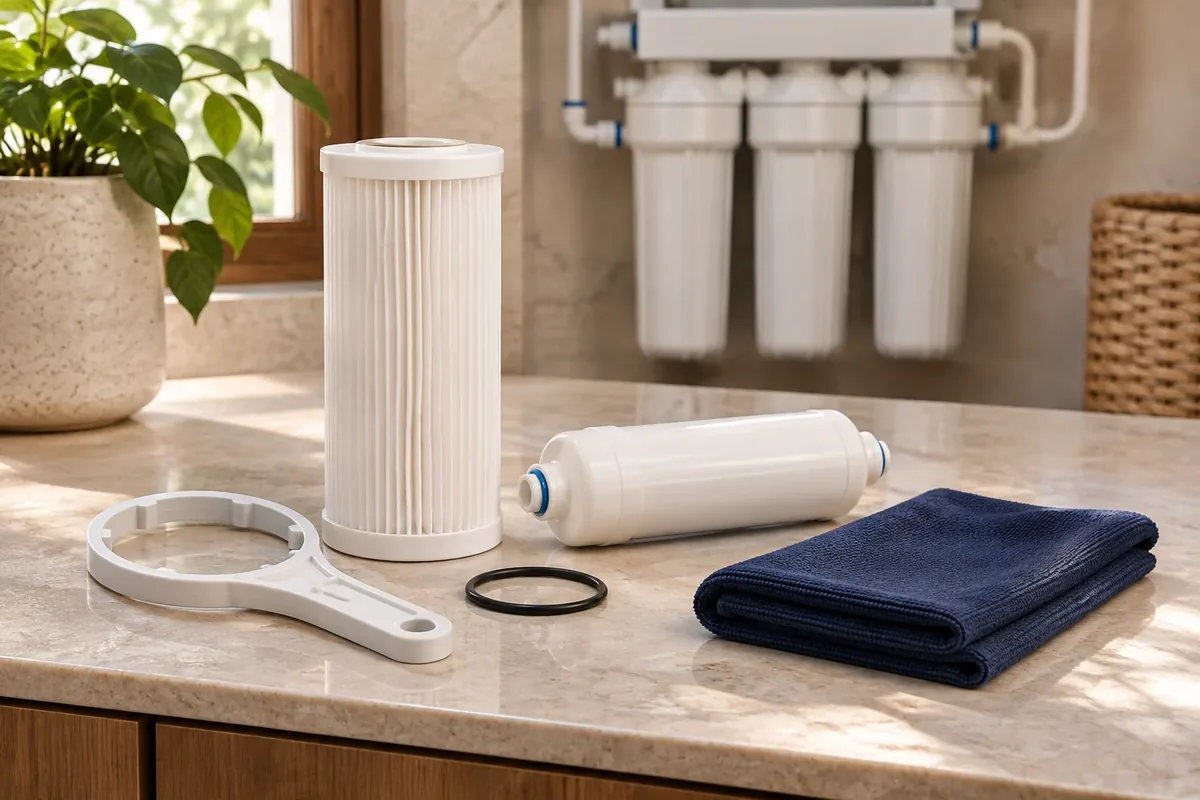
Look at how the material feels. A rough ring that returns where droplets dry is a different clue from a greasy film on a shower wall. Soap residue, cleaning products, and worn finishes can all change how a surface looks. A white mark on a single dark countertop is especially easy to overinterpret. Record what you see, how quickly it returns, and which products you used. Those details give a technician something more useful than a photo of one spot.
Clean the fixture and see what returns
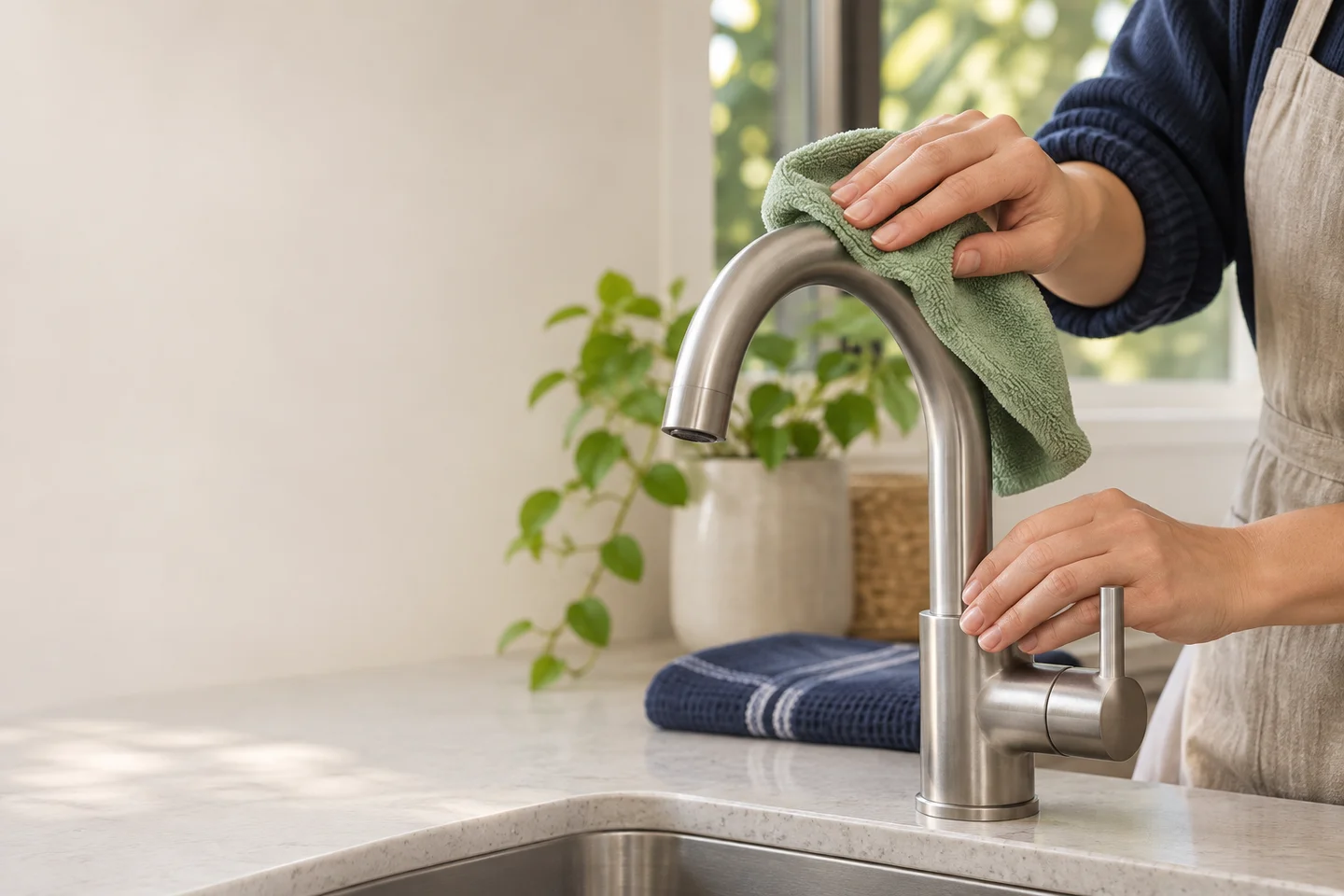
Start with the fixture manufacturer’s care instructions. Polished chrome, brushed metal, coated finishes, and natural stone can require different cleaning products. A soft cloth and a cleaner approved for that material are a safer first step than a scouring pad. Avoid soaking a finish or applying an acidic cleaner to stone unless the manufacturer explicitly allows it. If a showerhead has removable parts, check the instructions before taking it apart.
Watch what returns after cleaning
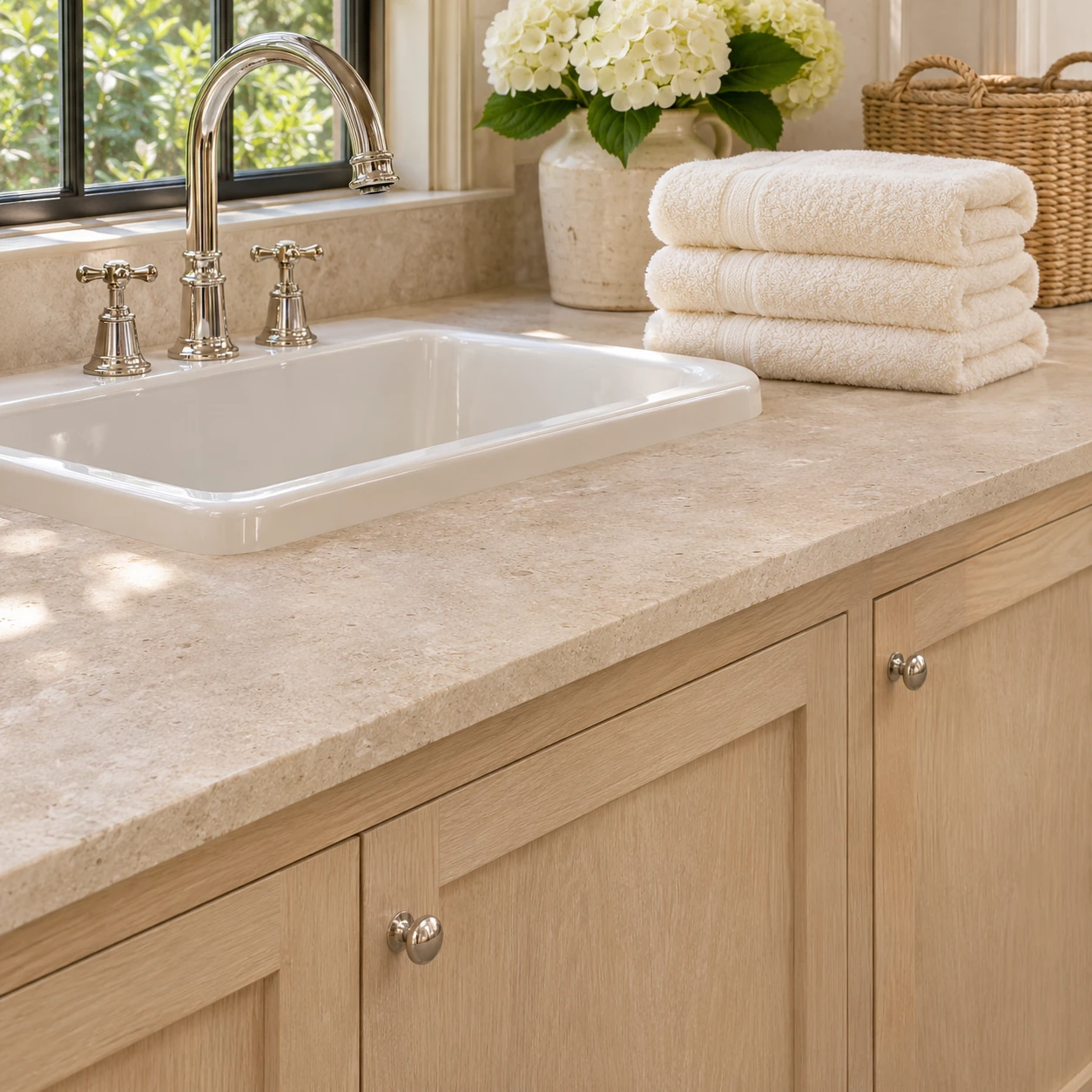
Once the surface is clean, wipe away standing water after normal use for several days. Pay attention to spots you cannot easily dry, such as the aerator or showerhead openings. If deposits return quickly across several fixtures, cleaning is handling the visible buildup while the incoming water continues to supply minerals. If one fitting alone keeps developing a ring, investigate the fitting and its surrounding surfaces before shopping for whole-home equipment.
What a hardness test can tell you
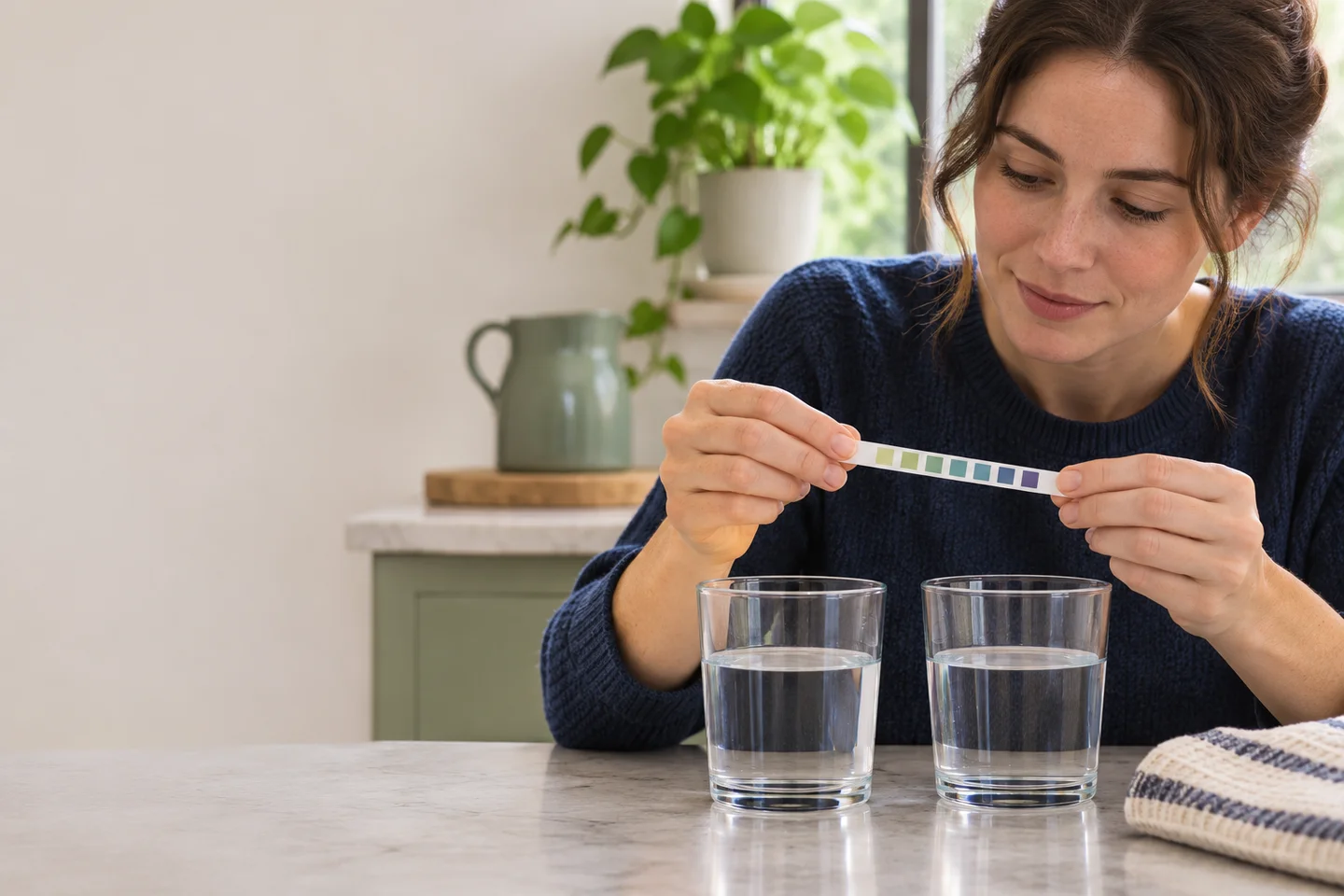
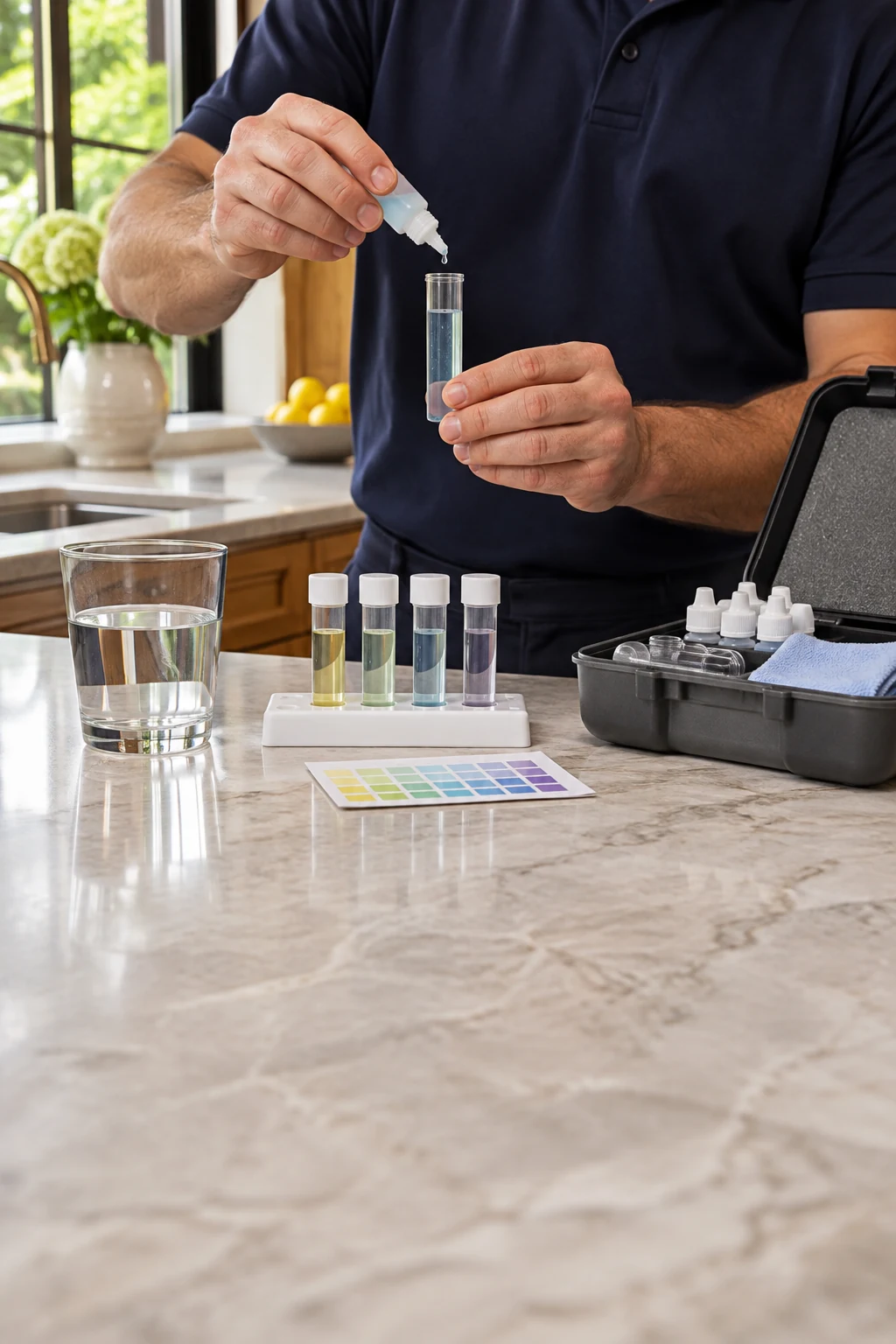
A hardness measurement gives you a baseline. Ask for the result and the unit, commonly milligrams per liter as calcium carbonate or grains per gallon. Use the same unit when comparing two readings or evaluating equipment. Tell the person taking the sample whether you already have a softener and whether the faucet is supplied before or after treatment. A reading from a treated kitchen tap answers a different question from a reading of the incoming supply.
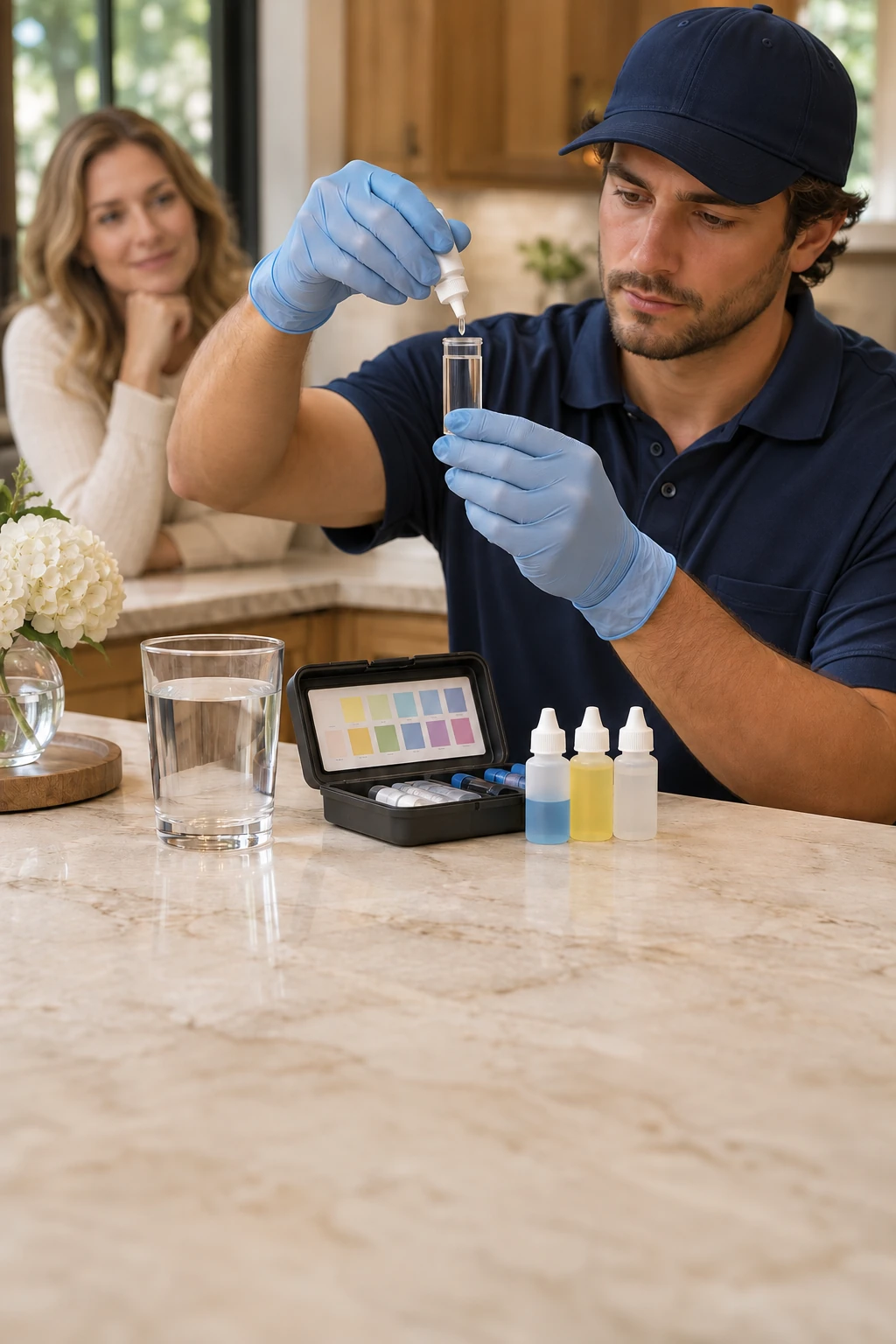
Compare before and after treatment
For a home with existing equipment, comparing an untreated sample with a treated sample can help show whether the equipment is still reducing hardness. If the readings differ but the marks persist, look at where the affected fixture is connected and when the deposits formed. Old scale can remain after water treatment changes. The useful comparison is how quickly deposits appear on a freshly cleaned surface over time.
Keep other water concerns separate
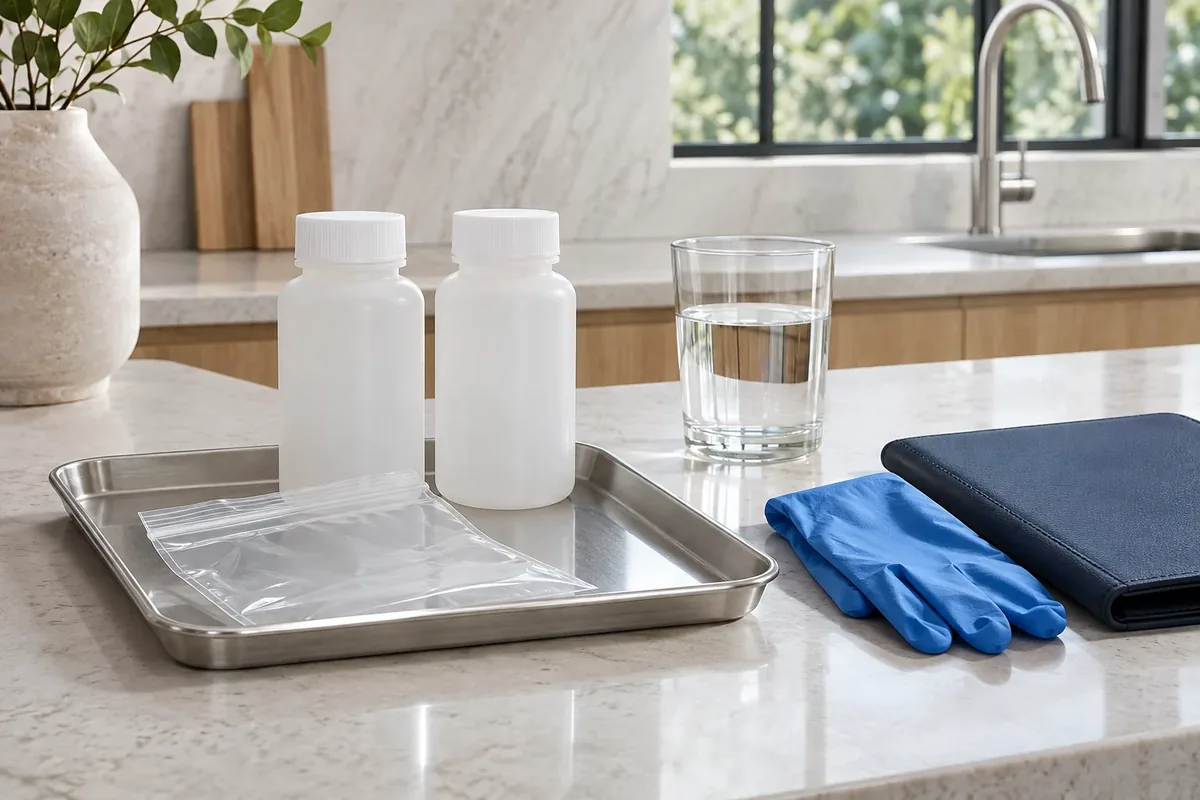
Hardness testing addresses the mineral question. Other concerns may call for different tests. Bring up a new odor, metallic taste, discoloration, or a private well with an overdue testing schedule separately. A hardness result cannot establish whether the water is suitable to drink. Ask your utility or local health department which laboratory tests are appropriate when the concern goes beyond scale.
Decide what you want to improve
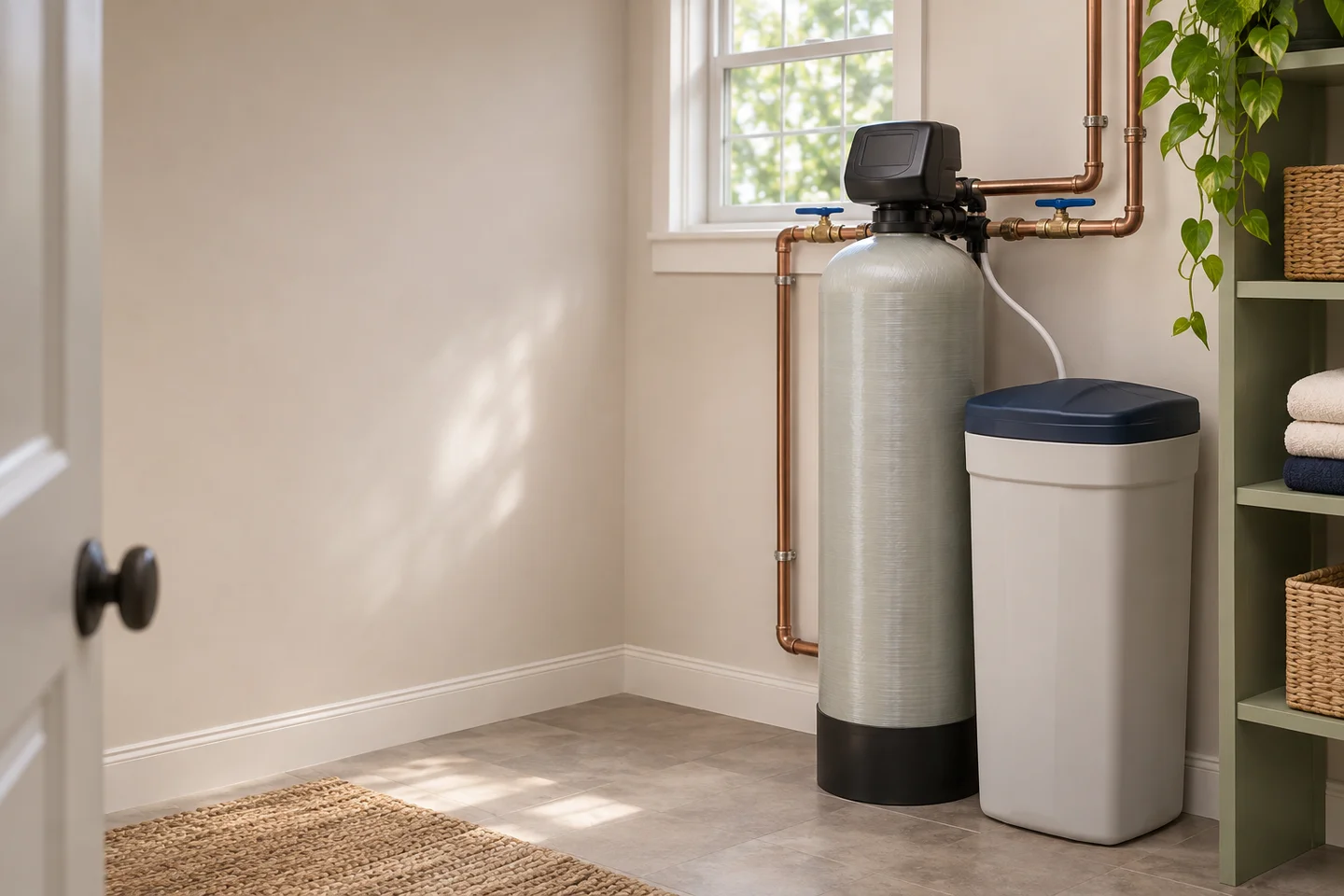
If the main problem is a showerhead that needs frequent cleaning, start by documenting the cleaning interval and confirming hardness. If scale shows up at many fixtures and you want to reduce how often you clean them, ask about whole-home softening. A softener targets hardness minerals. A drinking-water system at the kitchen sink serves that outlet, so it has a different job from equipment sized for the home’s plumbing.
Plan the right fit
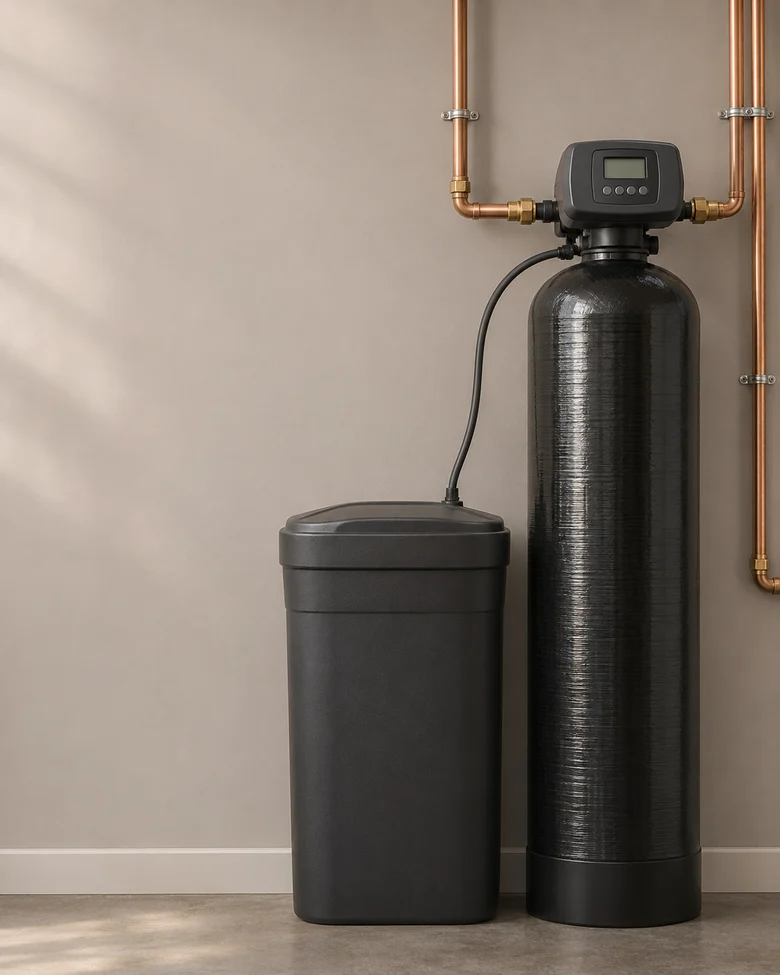
When comparing options, ask how the proposed system will be sized for the measured hardness, the number of people in the home, and the fixtures that may run together. Ask where it would be installed, what maintenance it requires, and how you would check performance after installation. If there is a well, mention any sediment, staining, or odor before selecting equipment. Those observations can affect which tests are useful and what order the components should go in.
Bring a short checklist to your water test
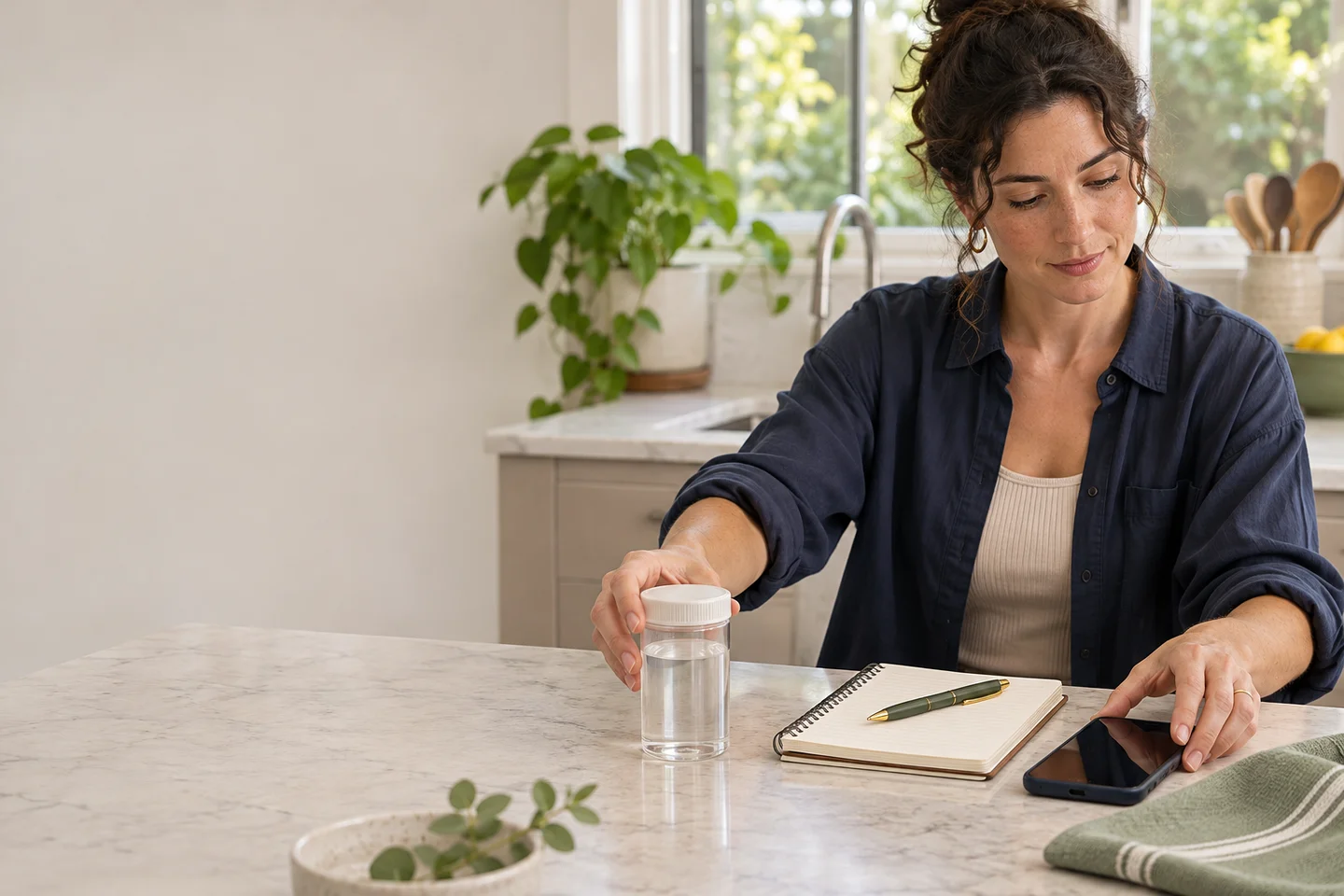
Write down the fixtures affected, the date you cleaned them, and when the scale returned. Note which marks appear near hot water, which follow a slow drip, and whether you see spots on dishes too. If a softener is already installed, record its model and the last time it was serviced. A few clear photos can also help if you recently cleaned the fixtures.
Set a practical baseline
Ask for a hardness reading and an explanation of how it relates to the problem you want to solve. If you have equipment already, ask whether it makes sense to test on both sides of it. Agree on a practical way to track improvement, such as how long a cleaned faucet stays clear. That gives you a baseline you can use when deciding whether to adjust maintenance, service existing equipment, or consider a new system.